How to Declutter Your Home, One Step at a Time
What you keep shapes how you live. When you take the time to revisit your belongings, you're not just organizing objects — you're redefining what deserves space in your life.
Intentional Tools for Modern Living
Declutter Checklist
A daily checklist organized by room. Check off tasks, track your progress, and build decluttering habits that stick — one small win at a time.
Start your checklistShould I Let It Go?
Not sure whether to keep something? Use this decluttering decision guide to review unsure items, set a deadline, and decide with more clarity.
Open the guideShould I Buy It? Scorer
Six questions, one 0-100 score. See what a purchase costs per use and how many hours of your real wage it takes, before the money leaves your account.
Score a purchaseCost Per Wear Calculator
Price, alterations and cleaning divided by the wears you will really get — with separate thresholds for everyday pieces and occasion pieces, plus the 30-wear test.
Calculate cost per wearIt's about consciously keeping items that genuinely enhance your life.
"Do I really need this? Or is it time to let go?"
THE UNUSED GADGETS:
It seemed so useful when I bought it, but it hasn't been touched in years. Is it time to reclaim that space?
THE FORGOTTEN CLOTHES:
They still fit and look good, but I haven't worn them in ages. Are they worth keeping, or should I declutter my closet and donate them?
THE STACK OF BOOKS:
They inspire me, but they've been collecting dust. Should I focus on a select few and donate the rest?
"Set a Declutter Deadline: Use It or Let It Go"
THE UNUSED GADGETS:
Give yourself one month to use it. If it doesn't prove its value, it's time to declutter.
THE FORGOTTEN CLOTHES:
Plan an occasion to wear them within three months. If they stay in the closet, it's time to declutter and donate.
THE STACK OF BOOKS:
Select one book to finish in two months. If it doesn't captivate you, declutter your shelf and pass it along to someone else.
Mindful Guides
Step-by-step clarity for every corner of your home.
How to Declutter Your Home in 5 Simple Steps
A foundational guide to starting your journey without feeling overwhelmed.
Read Guide
Room by Room: A Comprehensive Strategy
Specific tips for kitchens, bedrooms, and home offices to maximize focus.
Read Guide
The Psychology of Mindful Discernment
Understanding why we hold on and how to let go with kindness.
Read GuideHow to Declutter Your Home in 5 Simple Steps
Learning how to declutter your home doesn't have to be overwhelming. Follow these five steps to transform your space systematically and create a home that supports the life you want to live.
Start with a Vision
Before you touch anything, decide what kind of home you want. How to declutter your home starts in your mind, not with your hands. Visualize the peaceful, functional space you deserve.
Tackle One Room at a Time
When you declutter your home room by room, you see real progress and stay motivated. Start small—begin with a single closet or one corner of a room. Master that space before moving on.
Sort Items into Three Piles
Create keep, donate/sell, and discard piles. Be honest with yourself—when you declutter your home, ask: "Does this item serve a purpose or bring me joy?" If not, it goes.
Set Decluttering Deadlines
Give yourself a timeframe to decide. When you declutter your home with deadlines, you avoid decision fatigue. Use our app to set reminders and track when it's time to revisit unsure items.
Maintain Your Progress
The final step in how to declutter your home is keeping it that way. Adopt a one-in, one-out rule: for every new item that enters your home, let one leave. Regularly review your belongings to prevent clutter from rebuilding.
How to Declutter Your Home Room by Room
The most effective way to declutter your home is to focus on one room at a time. Here's how to approach each major area of your home for maximum impact.
Living Room
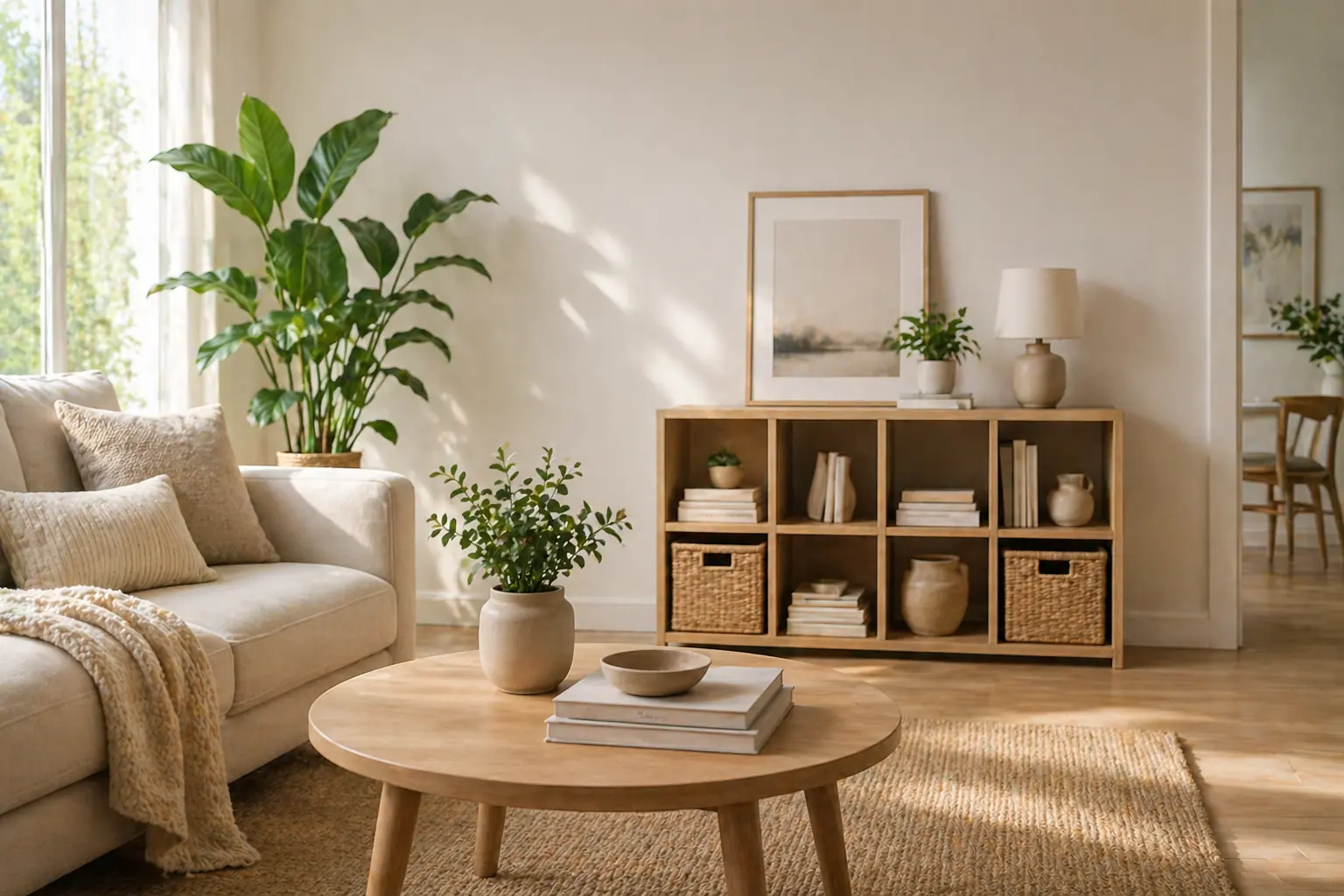
Remove excess throw pillows, organize media cabinets, and clear surfaces. When you declutter your living room, focus on creating a relaxing space that invites conversation and rest.
Bedroom
Declutter your bedroom by clearing under the bed, limiting clothing to what you actually wear, and removing items that don't belong in a restful space. Your bedroom should be a sanctuary.
Kitchen
When you declutter your kitchen, start with cabinets and drawers you rarely open. Donate duplicates (two can openers?) and toss expired spices. A organized kitchen makes cooking a joy.
Bathroom
Dispose of expired medications and products. Declutter your bathroom by keeping only what you use daily. Limit backup toiletries to a small bin—you can always restock when needed.
Home Office
Paper clutter piles up fast. To declutter your home office, sort papers into action, reference, and recycle. Organize cables and donate old electronics you no longer use.
Closets
When you declutter your closets, use the "hang it if you wore it" rule—if you didn't wear it in the past year, donate it. Seasonal rotation helps maintain closet clarity year-round.
Beyond Room by Room
Sometimes the hardest items aren't tied to a room — they're tied to a feeling, a season, or a brain that works differently. These guides cover the in-between.
60 Things to Declutter from Your Home
A room-by-room list of items most people can let go of today — plus seasonal sections for moving and the new year.
Read guide →10 Things to Stop Buying for a Clutter-Free Home
Decluttering is only half the work. This list covers the everyday purchases that quietly rebuild clutter and what to do instead.
Read guide →How to Declutter Sentimental Items Without Guilt
A seven-step framework for letters, gifts, photos, and inherited items — keep the memory, release the object.
Read guide →How to Declutter Unwanted Gifts Without the Guilt
Eight common gift-guilt situations and what to actually do with each — return, regift, donate, or photograph and let go.
Read guide →Decluttering After a Death: A Loved One's Belongings
A gentle, no-deadline guide to sorting inherited and sentimental things after a loss — what to keep, what to release, and the guilt.
Read guide →ADHD-Friendly Cleaning & Decluttering Checklist
Room-by-room micro-tasks, the doom box and maybe box methods, and time-boxing strategies built for an ADHD brain.
Read guide →Swedish death cleaning
A gentle döstädning checklist: pare down so no one else has to sort through a lifetime of your things.
Read guide →Decluttering before a move
A downsizing checklist so you only pay to move what belongs in the next home — no moving-day regret.
Read guide →The Psychology of Mindful Discernment
Understanding why we hold on and how to let go with kindness.
Why we hold on
Emotional Attachment
Objects carry memories. A gift from a loved one, a souvenir from a meaningful trip — letting go of the item can feel like letting go of the person or experience. But the memory lives in you, not in the object.
Sunk Cost Fallacy
You spent money on it, so it feels wasteful to let it go. But the money is already spent. Keeping something unused doesn't recover the cost — it only costs you space and mental energy.
Identity & Self-Image
We keep things that represent who we were or who we aspire to be. The guitar you never play, the running shoes gathering dust — they're not just items, they're versions of yourself you're not ready to release.
Fear of Needing It Later
What if I need it someday? This fear is powerful but rarely justified. Studies show we overestimate how often we'll use stored items by nearly 100%.
How to let go with kindness
Practice gratitude, not guilt
Instead of feeling guilty about letting something go, thank it for its role in your life. A gift has served its purpose the moment it made you smile. You don't owe it permanent space.
Reframe letting go as gain
Every item you release creates room — not just physical room, but mental space. You're not losing something. You're choosing what deserves your attention.
Start with the easy wins
Don't begin with your most sentimental items. Start with expired products, duplicates, or things you've already forgotten you owned. Momentum builds confidence.
Give yourself permission to change
The person who bought that item is not the person you are today. It's okay to evolve. Letting go is not a rejection of your past — it's an acceptance of your present.
Have feedbacks or any idea you want to share? Reach us at hi@declutteryourhome.net
Ready to declutter your home?
Explore our tools and start transforming your space, one confident decision at a time.
Explore Tools